
Host a “Big Questions” Conference in School
Interdisciplinary Learning is a key requirement of Curriculum for Excellence. Secondary schools deliver this entitlement partly or largely through aligning programmes of study across a range of subjects. There is also, though, strong encouragement to look at more flexible methods of delivering the curriculum. As early as Building the Curriculum 3, it was being made plain that:
“The curriculum should include space for learning beyond subject boundaries, so that children and young people can make connections between different areas of learning. Interdisciplinary studies, based upon groupings of experiences and outcomes from within and across curriculum areas, can provide relevant, challenging and enjoyable learning experiences and stimulating contexts to meet the varied needs of children and young people….Interdisciplinary studies can also take advantage of opportunities to work with partners who are able to offer and support enriched learning experiences and opportunities for young people’s wider involvement in society.”
Some schools have developed pupil conferences which offer interdisciplinary learning across a range of subject areas. Here is an example from one large secondary school:
“Big Questions” Conferences for S3-4 pupils
A typical format
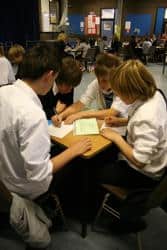
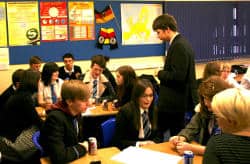 A cohort comprising half the year-group (approximately 100 pupils at a time) meets for an initial presentation lasting no more than 20 minutes. This is normally taken by one or two speakers (from churches or charity organisations, for example). Pupils then divide into pre-arranged groups of 20 and go to classrooms for their first activity (35-40 minutes). They then switch to a second classroom for another activity. Presenters remain in the same classroom and repeat their activity for the second group. Some conferences (like “Science and Religion”) substitute a plenary session instead of the second classroom activity. A reflection/evaluation sheet is completed at the end of the conference.
Each conference lasts 2 periods (a total of 1 hour 45 minutes), so the whole year group can be involved in the course of a morning. The learning experiences of each conference are linked to ongoing work within appropriate subjects, essential to ensure deep learning.
S3 Conference Topics
1. “Who do you think you are?”
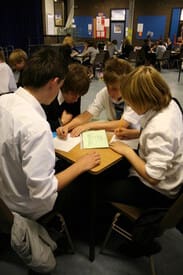 Young people explore the different ways in which they develop a sense of personal identity. This helps develop critical awareness of manipulative approaches by media (celebrity culture, teenage and other magazines), advertising, etc. Current and historical perspectives are explored. Health advice around diet and exercise is covered. The question is asked, “On what can we base identity?” (eg. How have we been made? Who loves us?)
Pupils create the ‘perfect person’ by using magazines. They then explain why this person is perfect and the difference there is between the ideal person and the pupil him(her)self. There are various video montages showing celebrities and their lives, prompting discussion on why some have gone off the rails. The historical aspect is looked at through the pupils creating a ‘poster’ for a specific era (the Victorians, post WW2, the nineties & present day). By using pre created information sheets, they must create a poster depicting fashions, culture and lifestyle of the given era. This is then discussed in groups, and comparisons are made to today. Finally they are given out a Johari window and are asked to evaluate their own lives; where they are, where they want to be, what they need to get there and what will stop them. If time allows, this could prompt discussions, but is used primarily as a personal reflection tool.
Departments involved: Social Subjects (RME, History), Health Improvement (Home Economics), Social Education.
Opportunities for support from the community: Schools Workers and Chaplains who frequently deal with people’s identity issues; church members from the fashion, marketing, communications areas; health professionals etc
2. “Twenty-first Century Church”
Pupils start (all together) examining the issue of stereotypes, and in particular stereotypical views of church. They then take part in two workshops:
1. Using the links on a website which overviews local churches/Christian organisations, pupils work in groups to develop a poster showing the extent that the local church meets the needs of Children, Youth, Adults & Community
2. Pupils investigate 3 types of church internationally: Poor, Persecuted and Privileged. This is done by taking each type individually and showing a relevant video with a discussion task. Starting with the Privileged church, the challenge is to name as many famous Christians as possible. A link is then made to the fact that they go to ‘privileged’ churches who have lots of resources/wealth and therefore can give back. A Hillsong video is shown to reinforce this. In looking at the Poor church, pupils are asked to work out how much they spend in a month on various items such as clothes and food. A video from the Scottish Bible Society on their Malta project is shown, explaining that poor doesn’t necessarily mean starving – the Maltese church is poor because they don’t have as many translations and versions of the Bible available to them. For the Persecuted church, pupils are asked to discuss actions they are free to do, and those they are not free to do. A video from Go Underground’s “Walk in Their Shoes” campaign is shown, with discussion following.
Departments involved: Social Subjects (RME, Geography and History)
Opportunities for support from the community: Schools Workers, Chaplains and church members can all bring up to date personal experience, and also a range of resources (e.g. Video clips of contemporary worship or church projects which serve the community). Organisations like Open Doors, Embrace the Middle East, Mission without Borders, Christian Aid, SCIAF and a host of others all have relevant resources.
3. “There must be more than this?”
A conference based on what gives meaning to life, and the dangers of alcohol and substance abuse. (No further details available) Departments involved: RME and Guidance/Social Education Opportunities for support from the community: Schools Workers, Chaplains and Organisations who frequently deal with issues of alcohol and substance abuse; health professionals etc
S4 Conference Topics
1. “Charity begins at home?”
Pupils investigate the role and effectiveness of overseas and domestic charities.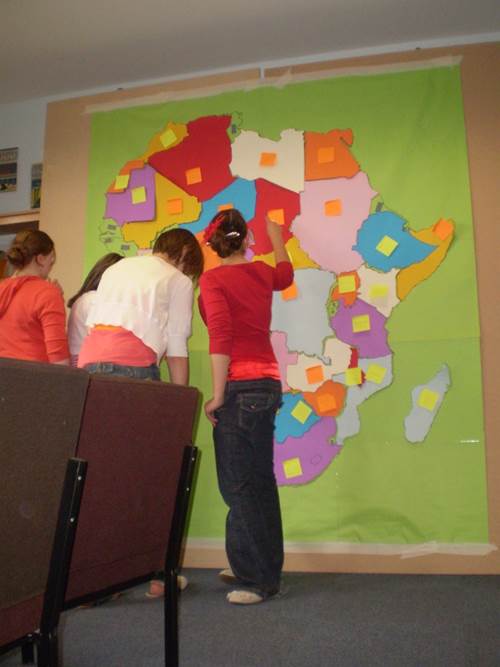
A key part of this conference is the involvement of a group of S6 pupils who have taken part in a development visit to India (an increasing number of schools organise regular visits to the developing world, in partnership with a development agency.)
Pupils start the session together and a short video montage is shown regarding charity and poverty around the world. This covers the wealth disparity between the rich & poor worlds using development indicators. A set of quiz questions follows. From here the programme is delivered in smaller groups. A short PowerPoint is shown on who is responsible for poverty and whose problem it really is – this covers everyone from ordinary citizens to government.
Pupils are then issued identity slips and asked to assume that identity for the next exercise, where they are given scenarios relating to charity and poverty and have to discuss how they would act.
Christian Aid’s “Paper Bag Game” is played with the pupils, allowing them again to experience what it would be like to be in an impoverished situation. They then have time to decide on questions for the volunteers who were in India at the summer, a Q & A time then follows which is always highly popular.
Departments involved: Geography, RME, History
Opportunities for support from the community: Schools Workers, Chaplains and church members can all help introduce teachers to the wide range of educational materials available from, for example, Embrace the Middle East, Christian Aid, SCIAF and a host of others. Volunteers at food banks, church members who have visited overseas development projects, and anyone who has first- hand experience can all make memorable contributions.
2. “Science and Religion”
An opening all-together session explores the wonder and immensity of the cosmos, using a short special-effects DVD about a journey to the edge of the Milky Way. This raises questions about the origin and design of the universe. There is a brief mention at this stage about complementary ways of exploring reality, of which Science and Religion are two. Pupils then divide into groups. They are first given a set of 24 cards with statements that would be regarded as scientific, moral and issues of faith. Pupils sort the cards into two categories (true & false) and then discuss why they put each statement into the categories. A clip from “Will & Grace” is then shown in which the characters all have a different view of ‘Kabbalah’, based on different ideas. Discussion then takes place as to what they base their beliefs on and where this stems from. A series of visuals is then shown such as a nuclear bomb, genetically engineered plant etc and the pupils are asked what they have in common – the answer being that science tells us how we do it, not if we should; that is where faith comes into play.
The main activity of the time is a mind map created by pupils on various statements. In groups they are given a statement (e.g. “murder is wrong”/ “new born babies cannot survive under 24 weeks”), and then asked to mind-map the science/evidence on it and also the values/beliefs behind on it. This should allow them to see that science and faith work together on many things. There is a final plenary, based partly around an edited clip from the TV Series “Lost” (in which 2 central characters, one a scientific sceptic, one emphasising spirituality, have to work together to save the island.
Departments involved: Sciences, Social Subjects (RME)
Opportunities for support from the community: Schools Workers, Chaplains, church members who are scientists etc may well be able to offer contributions. N.B. Unless you have considerable experience of the area, and of the permissions and boundaries within which volunteers can offer support to schools, it is strongly advisable not to enter into debates on Creationism, Intelligent Design etc.
People Involved
The “Big Questions” programme was co-ordinated by the Social Subjects Department. Different teams of teachers from various subject areas work together according to the focus of each conference. Presenters from the community include chaplains and workers from different charities. A key member of the team, however, was the School s Worker who co-ordinated contacts with the community, and helped deliver events. (In this case, she also sourced and developed some of the materials, in support of the teachers on the planning team)
For another example of a Big Questions Conference, see Serve Your Local School. The team from Plockton High School, who developed that example, can also make sample programmes available: https://www.syls.org.uk/grand-ideas/big-questions-rme-day-conference.html