
Sheep Posts 3
Indoctrination
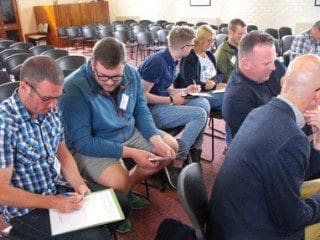
A group of Christian student teachers I talked to recently, gave highest priority out of 10 questions to this one: “Where is the line between influence and indoctrination?”
Whenever we interact with someone, we influence – more or less strongly. Our thoughts, our attitudes, moods, beliefs come across somehow.
As teachers who spend somewhere around 1000 hours per year with our students, our influence may be quite strong. If we have a good relationship with them, they will absorb some of our values. If they reject us, they will likely reject our values also. Influence is therefore inevitable – whether desirable or not.
Indoctrination on the other hand is based on a measure of force. It is based on the conscious or unconscious desire to plant our values into our subordinates. If we seek to indoctrinate our pupils, we are acting out of this wish, with a greater or lesser measure of force, manipulation or coercion.
Strangely in Europe, the fear of indoctrination is directed primarily against Christians. What I see though, it is a secular/materialist/naturalistic worldview that is constantly being indoctrinated.
EurECA provides networking and support for Christian teachers (and their national organisations) right across Europe. Their aim is to “encourage Christians, mostly in secularised schools, to live out their faith and bring the light of Christ to their workplace – courageously, gently and wisely.” We are most grateful to Matt Kaegi and Liviu Căprar, M.Ed. (EurECA Executive Officer) for permission to publish these blogs.
[All blogs on our website are the personal view of the writer and do not necessarily represent a position taken by CVE Scotland.]