Comenius and the Transformation of Education
What’s your perspective? Every teacher has one!
Here, Geoff Beech PhD, who has long experience in education, writes about the perspective of Jan Amos Comenius (1592-1670).
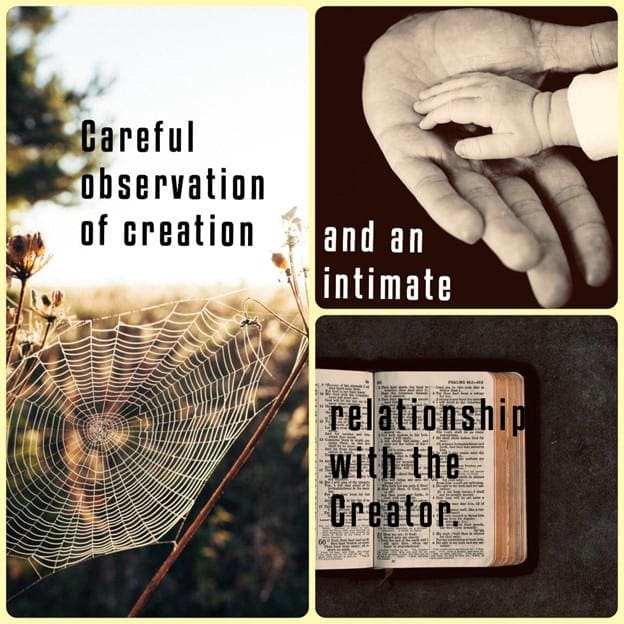
Whilst Geoff applies the lessons from Comenius to Christian schools, all Christian teachers in whatever setting can reflect on whether they would share Comenius’s perspective on education summed up in his reflection that two things make a great teacher:
Comenius and the transformation of education
 It was the Spanish, atheist philosopher Santayana who wrote, “Those who cannot remember the past are condemned to repeat it.” This has become a popular expression, probably spread by historians (!), but it contains a profound truth. In this brief piece, we look at a great man of education in the past and the subsequent demise of a model of education for his time that was genuinely Christian.
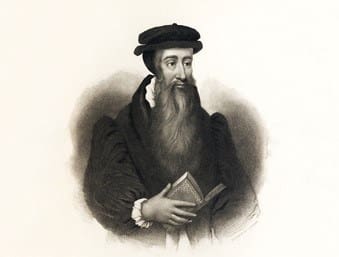
Over the past three hundred years, much has been written about the Czech Christian educator, Jan Amos Comenius. Comenius was a bishop in the Moravian church, and a passionate teacher, writer, philosopher and theologian. Most of all, Comenius was known for his writing on education, the textbooks he produced, and his philosophy of education which he published in his work, The Great Didactic. Because he lived in the 17th century and was surrounded by poor quality and brutal education, his work to change the status quo earned him the label of education reformer.
His time was also the time of Galileo, Newton, Francis Bacon, Kepler, Pascale, Descartes and many other notables. It was a time for thinking in new ways. It was the Renaissance. Many educators of the time saw the need for change from systems that were inefficient, had educational goals that were out of touch with the reality of society, provided mostly only for boys, and then only for a small segment of society.
Many of the education reformers of the time tried to introduce better quality textbooks, open up the curriculum, extend school attendance to all, introduce the vernacular language instead of teaching everything in Latin, and encourage teachers to be more compassionate with regard to the treatment of students. These reforms were significant, and many new schools started, and older ones improved. This was education reform indeed.
The difference with Comenius was that in reality, he was not really an education reformer but an education transformer: a complete transformation based on a new foundation. The plans Comenius had for education included many of the reforms proclaimed in his age, but he went much, much further. His education was founded on a God-perspective: God’s perspective on teaching and learning, God’s perspective on the student, and God’s perspective on the Creation. Comenius taught that students should not be locked away with ancient texts, though good texts had their place, but should experience the Creation, learning from everything their senses could garner from the environment.
To that end, his instructions for teachers in his Great Didactic contain scores of illustrations from gardening, farming, and village life. This was not only the way language was to be taught but he was also teaching how to live a full and Godly life. All of his teaching was couched within an understanding of a God who is near and who is involved with, and reveals Himself through, His Creation and the beings He created in His image.
Many of Comenius’s ideas can still be found in practice today as they were adopted by other education reformers. However, not long after his death in 1670 the idea of an imminent God, integral to Comenius’s holistic model, was dropped. Not surprisingly, much of the model fell apart without this key ingredient to hold it together.
As the Enlightenment started to gain a foothold, for many, God became relegated more and more to spaces outside education, and we begin to see a very common process: one that has been seen in so many schools, even Christian ones, over the years and a danger of which every Christian teacher today must be aware.
We may begin with a strong relationship with God whom we see as imminent and intimate, working by His Holy Spirit in and through those allegiant to Him. Over time, we become more consumed with our own interests and desires and relax into a theism that functions within a set of cultural, religious practices. The next stage is that God is seen to be far away. He is out there somewhere but not immediately relevant to life: deism. It is only a short step from deism to agnosticism and doubting that God really exists at all and once that stage is reached, atheism is often the result. It brings to mind the saying, “If God seems far away, guess who moved!”
This progression is so common, and we see it not only in institutions but in individuals, and possibly we may see it in ourselves. At each of the stages we are given, whether we recognise it or not, a choice. We either will to desire to return to God, seeking a relationship once more with the imminent God, or we will to desire seeking our own path, becoming, in effect our own gods.
Comenius chose to desire God and to use education to worship Him as He becomes unhidden in His word and His Creation. There is always a need for us as individuals and institutions to ask in which direction our desires are pointing. Oh that we and our schools could have the will to desire God rather than to be gods, even education gods.
Geoff Beech July 2020
[All blogs on our website are the personal view of the writer and do not necessarily represent a position taken by CVE Scotland.]