
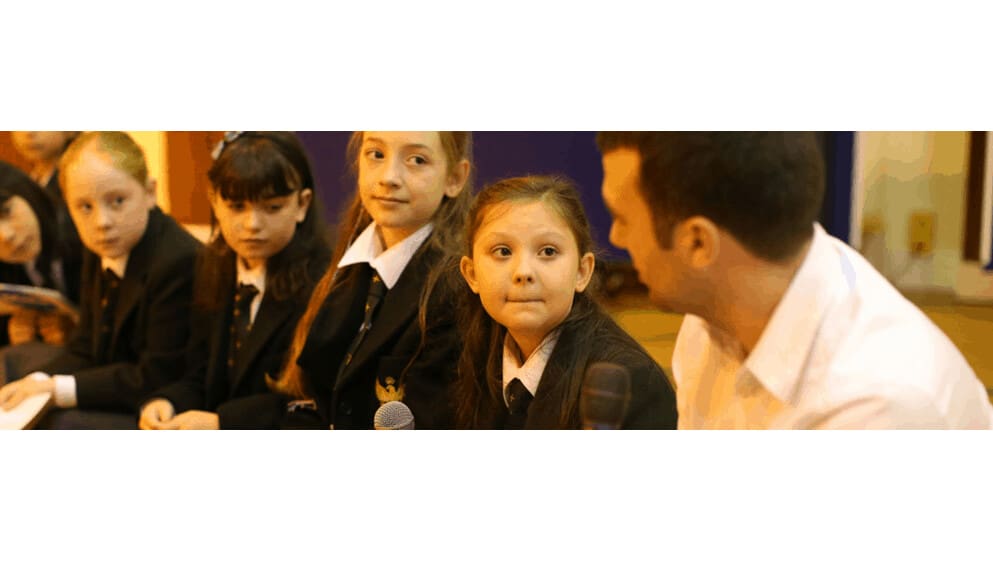
SCIAF’s Resources on Climate Change and International Development: Mark Booker Explains
There has been a lot of attention in the media this last year on the urgency in which humans must act in order to preserve our planet and reverse some of the damage already caused. Climate change and global poverty topics are now more of a feature in school planning than ever before, even for the very young.
Mark Booker, Senior Development Education Officer for SCIAF (Scottish Catholic International Aid Fund), kindly agreed to supply CVE Scotland with some helpful advice for teachers, schools workers and families from early years through to the end of secondary school. It’s always really good to hear of excellent resources with a strong connection to the Christian faith and from someone who has great experience and passion for the subjects! Here he is in conversation with Victoria Myles, Senior Administrator for CVE Scotland. Thanks Mark!
How long have you been working for SCIAF and what brought you to work for them?
I’ve been working for SCIAF for over 7 years. I was a youth worker and had been in the same role for over ten years. I loved my previous job but as my life changed to include kids of my own, I noticed the role of Schools Officer advertised at SCIAF. It would include face to face work with children and young people but mainly within the structure of the school environment. The role also included the creation of resources, working with volunteers and lots more. The work of SCIAF in international development and in helping the poorest people not only survive but thrive sat well with me. It was also a real pull for me that the inspiration to help the poorest people help themselves came from Scripture. We see many times in the Bible where Jesus confronts injustice and stands up for those that are looked down upon. Elsewhere (old and new testament) we read that as Christians we are called to especially look out for those that are oppressed and vulnerable as an act of our faith.
What is the area you focus on within SCIAF?
My job title has changed from when I arrived over seven years ago to now being ‘Senior Development Education Officer’. My focus audience is still very much within schools but also includes development education across ages and incorporates particularly Catholic parishes and also universities. I can be asked to present in a school on Climate and the impact on people and landscape with Primary 5 and the next day I maybe speaking to 6th year pupils about human trafficking. It is very varied and that’s what I love. Any theme and topic that sits within international development and with particular reference to how that topic reflects faith, we will do. I deliver inputs but I also write resources to be used by teachers to cover Es and Os within the CfE curriculum.
We don’t exclusively work with Catholic schools but we offer resources and inputs that directly link with the RCRE curriculum and Catholic schools account for most of our inputs.
There are some great resources available for teachers and schools on the SCIAF website. Can you tell us about some of these that can be used in denominational and non-denominational schools please?
Because we have the ability and mandate to educate on issues of global poverty and particularly to the Catholic community we do make sure that areas of the RCRE curriculum called ‘This is our Faith’ are covered within our resources and inputs. We do not neglect other areas of the Curriculum for Excellence however and welcome opportunities for non-denominational schools to use our resources and request workshops from SCIAF staff and volunteers.
We have a relatively new resource for Primary and Secondary level looking at SCIAF’s response during an international crisis: Emergency Response Resource for Schools.
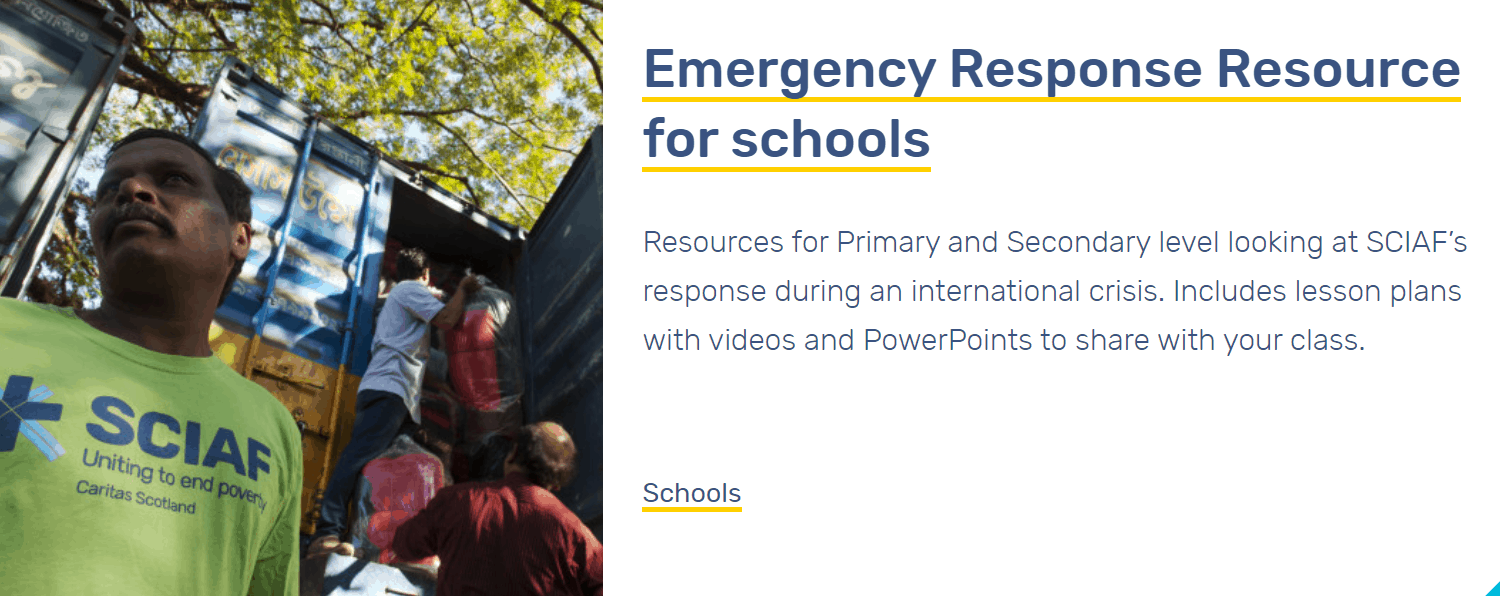
This includes lesson plans with videos and PowerPoints to share with pupils. This resource came from the increase in natural disasters and how we can look at climate issues and how it impacts people across the world. This resource is ready to go and any teacher can download it and use it.
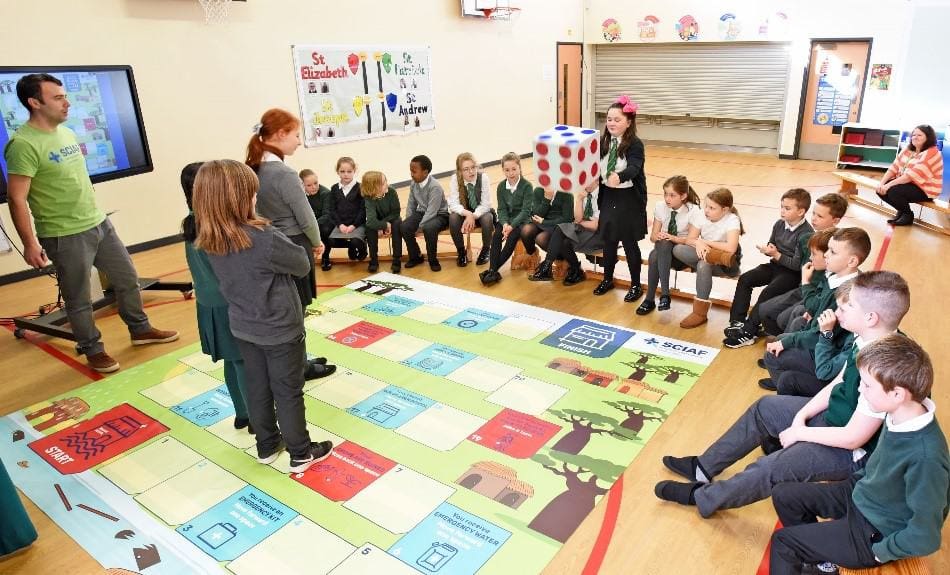
A bonus for primary level 2 is a giant board game that we come and deliver. It’s a 3m x 3m floor mat with a big foam dice and interactive presentation. A class is split into three teams and each nominate a human counter to move around the board as the other team members roll the dice. The aim of the game is to get from primary school to secondary school in the aftermath of a disaster. Along the way there are positive and negative actions that you will experience. When you land on an action square the interactive presentation comes into play. The board is represented on a screen and when you click on an action square, it takes you to a video or a case study so the pupils can see what impact disasters have on people and what an international development agency like SCIAF have done and continue to do in response.
Other examples of resources include an early year’s big book and prop bag. This is a session that staff and volunteers deliver and is really about that first experience for small children about international development. The main aim of this workshop is for the children to be engaged and to learn about another country through touch, sight, smell and hearing. The book tells the story of what life is like for a boy called Nulai in Cambodia. It follows his typical day and the children get to engage with it. When the bag symbol appears in the book, the children shout out and we look in the prop bag for the next prop. We look at the Cambodian flag, smell pepper corns (as they grow lots in Cambodia), go fishing, listen to a Cambodian hymn, try on traditional clothing. It’s great fun!
There are lots more resources and visits that can be requested so visit our website to see more www.sciaf.org.uk
Thanks Mark, these are really fantastic resources. Are there any tips you can share on the best ways to plan and implement resources please?
Not so much a tip but just that the obvious is important. We need to offer schools what they need to cover curriculum areas or we are just entertaining pupils without making the links to curriculum Es & Os. So if we are youth workers, ministers, volunteers going into schools, we need to ask what the school needs. Strong working relationships are key.
“So if we are youth workers, ministers, volunteers going into schools, we need to ask what the school needs. Strong working relationships are key.”
If you’re a teacher using the resources SCIAF has produced, then please get in touch if you need any help. Each resource comes with a lesson plan but we are happy to discuss how we can further help you.
Which of these would you recommend for families at home, or teachers providing distance learning?
I like to think that our resources can be used at home. They have been created with a teacher leading it in mind but during these ‘lockdown’ times we have been highlighting resources on social media and pointing pupils to online resources. We have been using our You Tube channel (SCIAF) to upload short videos that can be used as discussion starters on issues of climate, other global issues and comparison activities with our lives and the lives of others around the world.

What do you find is/are the most effective way(s) to educate and inspire young people into action in issues such as climate change, poverty and global development?
I don’t think I have a magic answer other than the following steps that we take with most resources:
- Use real stories of young people and their challenges with climate change and global poverty. This way, young people in Scotland can connect in a real way rather than just been told that millions of people will die of hunger.
- Learning has to be engaging. Not always active, but it can be.
- It can’t be always about the problem. Young people (as well as adults) want to see a solution and how they can play a role in helping. Providing ways to respond to climate change and its impact on the world, or illegal mining, or land grabbing are important or else we just tell people the world is awful and that’s the way it is. This response might be fundraising but it could be prayer, making lifestyle changes or it could be signing a petition against illegal mining in Colombia or emailing your local MSP asking what the Scottish government are doing to slow the onset of climate change. But the key is that we offer something. Something as simple as joining a litter-pick could be something that is really effective at mobilising young people.
Aside of the steps above. If you speak with passion and share real stories (remembering to maintain the dignity of the person in the story), you cannot go too far wrong because as humans we tend to relate to other humans and when we see or hear suffering we are moved. We don’t need to sensationalise stories or show people in their darkest moments to evoke action.
If you were able to impart one piece of information/advice on Climate change to every young person in Scotland, what would that be?
My piece of information for everyone regarding climate change would be to seek how climate change is impacting people across the world. Climate change does effect the poorest most and when you see that families are struggling to grow enough food to survive, people’s way of life is being destroyed and natural disasters (floods/droughts) are increasing, it’s difficult to ignore. It drives us to do something and take action.
Thank you very much Mark for taking the time to share with CVE Scotland.