

Whole School Values Case Study
Because of their compatibility with the approaches and values embedded in Curriculum for Excellence, Christian Values can significantly enhance all aspects of a school. In this case study, a primary school head teacher explains her school’s approach, which is based on the Early Years Collaborative Approaches model.
The Scottish Government expects all schools to develop agreed Values in a consultative/ collaborative manner, and the approach described here is a model of good practice:
 How we started
In a bid to bring very Christian values into our school we began with a simple statement:
- I value myself
- I value others
- And like the Scottish people value integrity, compassion, wisdom and justice
During collegiate time we began then to discuss as a staff team what this meant for all staff, pupils, parents and other agencies coming into school. After teasing out the meaning, it was discussed at the Parent Council and then distributed for comment to all parents. There was a unanimous decision to endorse the values after a slight change to make it more encompassing:
- And like the people of Scotland value integrity, compassion, wisdom and justice.
Assemblies raise awareness
5 whole school assemblies are now given over annually to helping everyone fully understand what our values mean. These are led by the HT (taking the first two together), the DHT and 3 PTs take on making sure everyone understands how these values live out in the life of the school. Even the youngest children understand what it means to show compassion to others. Bible stories are often acted out or used to show children the practicalities of what it means to show these values.
There are other obviously other Christian values we want our pupils to hold on to and live by. These are covered by visited ministers, Christian workers, as well as a Muslim lady, visiting the school for Religious Observance assemblies. Such values as forgiveness, patience, kindness, self-control, to name but a few, are covered using “Making sense of ….” as the theme for the assembly.
 Classrooms are crucial
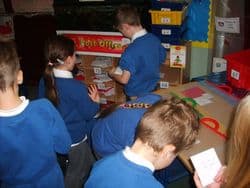
Values are talked about all the time in school. They are displayed in classrooms and corridors. Teachers use values in their teaching across the school and Restorative Conversations which have to take place sometimes, feature the school values heavily. I have heard one Christian teacher discuss with her Primary 1 class what patience means and how they can make it a part how they act. They then are seen to be “practising patience” and are able to talk about what it means and how it helps us all feel better. Our values are what we all, from the youngest to the oldest, live by in school to make it a happier and healthier way to be.
Collaborative Approach
We followed the approach by:
- Starting small, thus reducing the risk
- Planning how we wanted to get everyone on board and change the way some people acted in school.
- Highly effective change was brought about and has stayed.
We did the “Thinking part” first using the three questions
- What do we want to accomplish?
- How will we know that the change we want is an improvement to what goes on already in school?
- What changes can we make that will lead to improvement?
Then we did the “Doing part” – the PDSA cycle Plan, Do, Study (what was learned and what should we do next, Act.
 How was the impact of this process evaluated?
The most common approach to evaluation was through focus groups, where pupils, parents or staff were asked to discuss relationships etc. within the school. Observation (of lessons and out-of-class activities) also yielded useful evidence. Because the school’s rates of exclusion and significantly disruptive behaviour were already low, it was not possible to derive hard data from any significant improvements in these areas. Attainment and achievement frequently improve after consistent development of whole-school values; this will be easier once the flux caused by CfE implementation has abated.
Key impacts observed included
- changes in how teachers (and sometimes pupils) talked about our values
- improvements in behaviour and relationships, both inside and outside the classroom
- Increased teamwork: change is almost always a product of team endeavour