James Clerk Maxwell
James Clerk Maxwell (1831-1879) – Christian genius whose discoveries led to colour TV
Nigel T. Faithfull
A large monument of James Clerk Maxwell was erected in Edinburgh in 2008. He is known as Scotland’s Einstein, was a Christian, and paved the way for the modern world with its electrical and electronic devices that we so rely upon. I am fascinated by the contribution to modern civilisation which has been made by famous scientists, such as Faraday and Maxwell, who were sincere Christians. Their examples should encourage us to be confident in our witness and not fear those who consider belief in God as being feeble-minded.
Einstein said, ‘One epoch ended and another began with James Clerk Maxwell.’ When asked if he had stood on the shoulders of Isaac Newton, he replied: ‘No, I stand on Maxwell’s shoulders.’ Stephen Hawking said, ‘Maxwell is the physicist’s physicist.’
Early learning
Born in Edinburgh on 13 July, 1831, he spent his first eight years in Galloway.
By the age of eight his mother had taught him to learn the whole of Psalm 119, and his great memory enabled him to give chapter and verse for quotes from many other Psalms. After his mother’s death he was sent to the Edinburgh Academy. His odd clothes, designed by his father, and his rustic Galloway accent and stutter, together with his weird way of expressing humour, meant he was teased and nicknamed ‘Dafty’. However, he made a couple of lifelong friends who were also to become university professors.
Further education
Aged 16, he entered Edinburgh University to read physics and philosophy. James was determined to choose science, and headed for Peterhouse, Cambridge, but soon transferred to Trinity to read mathematics and physics. His original mind objected to cramming traditional learning, but realised it was an essential preparation ‘for the intelligent study of the material universe.’
Creation beckons
Halfway through his degree course Maxwell summarised a long held belief that as far as God’s creation was concerned, ‘nothing was to be left unexamined,’ there was to be no ‘holy ground’ where Christians should not trespass. ‘You may fly to the ends of the world and find no God but the Author of Salvation. You may search the Scriptures and not find a text to stop you in your explorations …’ He applied this approach not only to the commonly held theories of his day, but to his own Christian beliefs. Early in 1853 he wrote, ‘I have been reading Archdeacon Hare’s sermons, which are good.’
A discovery of sin
In June 1853, while visiting the home of Rev. Charles B. Tayler, the uncle of a classmate and the evangelical Rector of Otley, he fell ill and was kindly nursed back to health. He said this experience of Christian kindness had given him a new perception of the love of God, being convicted that ‘Love abideth, though knowledge vanish away’ (1 Cor. 13:8). On his return to Cambridge he wrote to his host: ‘I have the capacity of being more wicked than any example that man could set me, and … if I escape, it is only by God’s grace helping me to get rid of myself, partially in science, more completely in society, – but not perfectly except by committing myself to God…’ He was saying he could help himself to avoid sinning by concentrating on his work and spending time with godly friends, but that was not the perfect solution – only God’s grace could purify him from all sin through faith in the sufficiency of the blood of Christ. A change of heart had occurred, and for the next thirteen years he taught Working Men’s classes every week, and showed his kindness by helping a fellow student suffering with eye-strain by reading to him from a textbook. He soon afterwards suffered the loss of his father on 2 April, 1856.
Back home to Scotland
After a brief Fellowship at Trinity, when Maxwell published a notable mathematical treatment of Faraday’s ‘lines of force’ connected with magnetic induction, he was appointed professor of Natural Philosophy at Marischal College, Aberdeen. While here, he married the Principal’s daughter, Katherine Dewar. He also became an elder in the Church of Scotland. The two Aberdeen colleges merged in 1860, so they moved to London when Maxwell became professor at King’s College.
Attends a Baptist church
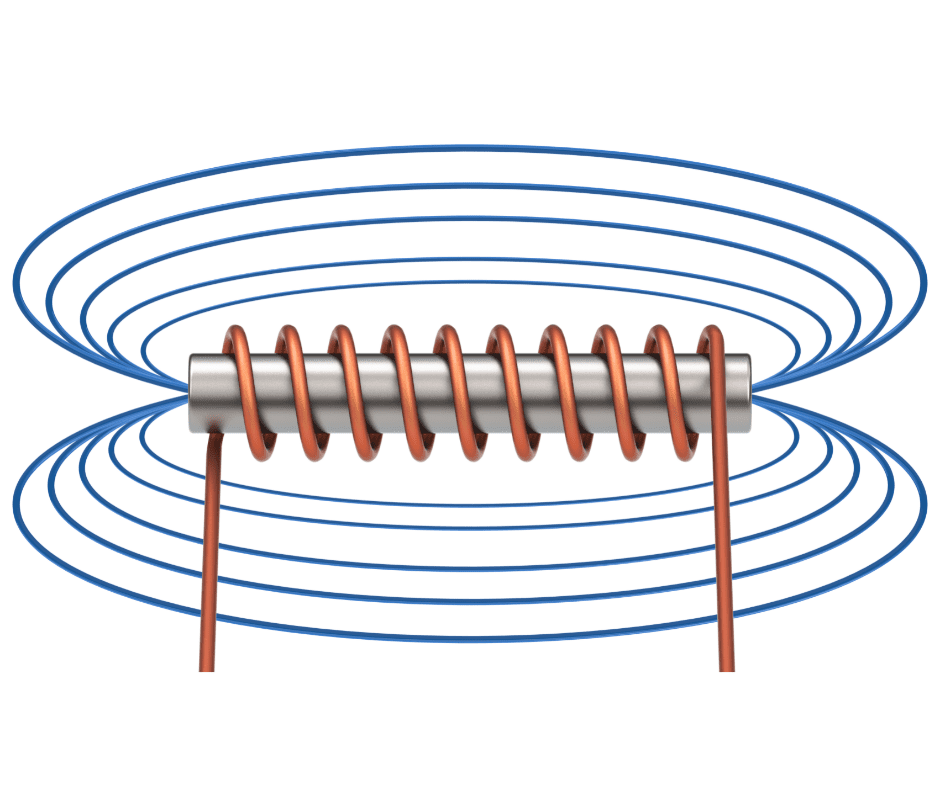
He wrote to his friend Charles Tayler in February 1866: ‘There is a Mr. Offord in this street, a Baptist who knows his Bible, and preaches as near it as he can, and does what he can to let the statements in the Bible be understood by his hearers. We generally go to him when in London, though we believe ourselves baptized already.’ He published ‘On Physical Lines of Force’, which predicted that there were electromagnetic waves which could travel at the speed of light, followed by his famous equations in 1865, which describe the generation and interaction of electrical and magnetic fields, and showed how they can move through space as waves at the speed of light. They formed a vital bridge between Faraday’s laws and Einstein’s relativity theory and the later quantum theory.
Return to Glenlair
Maxwell was a man of independent means, returned to his estate in 1865, and continued his father’s custom of leading nightly Bible readings for the family and servants. He kept up scientific correspondence with academic friends such as William Thompson (later Lord Kelvin) and eventually published his famous Treatise on Electricity and Magnetism in 1873.
Danger of using science to interpret the Bible
Writing about the Genesis account of the creation of light, he expresses great caution about interpreting Scripture by the light of some new scientific discovery: ‘But I should be very sorry if an interpretation founded on a most conjectural scientific hypothesis were to get fastened to the text in Genesis … The rate of change of scientific hypothesis is naturally much more rapid than that of Biblical interpretations, so that if an interpretation is founded on such an hypothesis, it may help to keep the hypothesis above ground long after it ought to be buried and forgotten.’
Final return to Cambridge
In 1871 Maxwell returned to Cambridge to direct the construction and equipping of the now famous Cavendish Laboratory, where the electron and neutron were discovered and which inspired 29 Nobel prize-winners. In his sixth year as Cavendish professor, he began to be afflicted with the same fatal illness endured by his mother, abdominal cancer. A minister who visited him in his final weeks witnessed that, ‘… his illness drew out the whole heart and soul and spirit of the man: his firm and undoubting faith in the Incarnation and all its results; in the full sufficiency of the Atonement; in the work of the Holy Spirit. He had gauged and fathomed all the schemes and systems of philosophy, and had found them utterly empty and unsatisfying – “unworkable” was his own word about them – and he turned with simple faith to the Gospel of the Saviour.’ He died on 5 November 1879, and was buried in Parton churchyard near Glenlair.
Genius
The belief in a Creator God who designed an orderly universe was the bedrock on which his genius flourished. Einstein declared his work to be the: ‘most profound and the most fruitful that physics has experienced since the time of Newton.’1 His studies on light and colours led to the world’s first colour photograph using the RGB three-colour method, which is the basis of all our TV and computer monitors. His formula that frequency times wavelength equals the speed of light underlies the use of all radio and television transmissions, and his calculations predicting that the rings of Saturn were composed of many small particles, was later confirmed by astronomers. He was so ahead of his time that people of his day were unaware of his true greatness.
Greater than Maxwell
When Jesus walked this planet he had come in the fulness of time and at the right time. Yet he was also, in a sense, ahead of his time. He spoke of things yet to come, of ‘signs in sun and moon and stars … For the powers of the heavens will be shaken’ (Luke 21:25-26 ESV). Whereas only clever mathematicians could understand Maxwell’s equations, Jesus spoke plainly so that ‘the great throng heard him gladly’ (Mark 12:37b ESV). The truths Jesus told will never be improved upon or replaced by better theories, and are simple enough to understand. We just need to believe them as Maxwell did.
Nigel T. Faithfull, BSc, MSc, PhD (Wales) is a retired analytical chemist and member of St Mellons Baptist Church, Cardiff. His book, ‘Universe – Time, Space, Life, God’, was published in 2017.
Sources
Lewis Campbell & William Garnett, The Life of James Clerk Maxwell, Macmillan, London 1882; available from https://archive.org/details/lifejamesclerkm01garngoog
Ian Hutchinson, James Clerk Maxwell and the Christian Proposition, MIT IAP Seminar: The Faith of Great Scientists, Jan 1998, from https://silas.psfc.mit.edu/Maxwell/maxwell.html
References
- https://www.scotsman.com/news/campaigners-have-theory-memorial-city-physicist-2465759