
Michael Faraday – Scientist and Christian
Michael Faraday – Famous scientist and Christian
Nigel T. Faithfull
With institutionalised atheism, children in school science lessons may detect a slight sneer when they say they believe God created the earth and the first humans. We have in Michael Faraday (1791-1867), a world-famous scientist who was not afraid to declare his belief, not only in a Creator God, but also his personal faith in the Lord Jesus Christ.
Universally acknowledged
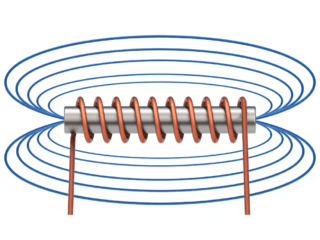
Albert Einstein kept a picture of Faraday on his study wall alongside those of Sir Isaac Newton and James Clerk Maxwell. Ernest Rutherford (1871-1937) a Nobel Prize-winner considered the father of nuclear physics stated: ‘When we consider the magnitude and extent of the discoveries and their influence on the progress of science and industry, there is no honour too great to pay to the memory of Faraday, one of the greatest scientific discoverers of all time.’ He uncovered the principles behind the electric motor, dynamo and transformer, and formulated the two laws of electrolysis, and the two laws of electromagnetic induction. The modern electric car is based on his discoveries.
Thirst for science
Michael Faraday was born on 22 September 1791 in the London Borough of Southwark, where his father was a blacksmith. He earned a little money delivering Sunday newspapers before his family went to church, and did this so conscientiously that his employer, a bookseller and bookbinder, gave him a seven year apprenticeship from 1805-1812.
As books came in for binding, his inquisitive mind lapped up the various articles, especially Electricity in the Encyclopaedia Britannica, and Jane Marcet’s Conversations in Chemistry. He claims to have been taught to think by Isaac Watts’ (1674-1748) The Improvement of the Mind.
Influence of Isaac Watts
Watts’ book, written from a Biblical perspective, structured his future method of working. Watts says, ‘Let the hope of new discoveries, as well as the satisfaction and pleasures of known truths, animate your daily industry.’ Faraday lived above his laboratory at the Royal Institution and worked long hours at the bench. He was so motivated by the thrill of uncovering truths about God’s creation and the laws by which it operates, that his face lit up and his hands trembled with excitement at the prospect of a new discovery. Every day he entered his ideas and discoveries in a notebook, and by 1859 these had amounted to nearly 16,000. His infectious enthusiasm made his lectures popular with children as well as adults.
Faraday’s church
Faraday’s parents brought him up in the Sandemanian tradition. They believed in separation from state control and aimed to implement the spirituality of the church in apostolic times. They believed that coming to faith in Christ should be by a bare mental assent to the truth of the gospel, because if feelings played a part, then salvation would depend to some extent on works. Others have shown that faith should result in feelings.
Two commitments
His heart was captured by Sarah Barnard (1800-1879), daughter of an elder at his church, and they became engaged in 1820 and married on 12 June 1821. They were devoted to one another for all their married life and he wrote to her most affectionately when he was working away from home. In 1837 he writes, ‘Dearest Wife, I have now returned to my room to talk with you, as the pleasantest and happiest thing I can do. Nothing rests me so much as communion with you. Dear girl, think of me till Saturday evening … Ever my Sarah, your affectionate husband.’ They had no children, but two nieces lived with them at the Institute and kept Sarah company.
About this time Faraday experienced another change in his heart, this time a spiritual one. Nothing is recorded, but a month after his marriage he made his confession of sin and profession of faith before the church. Sarah asked why he didn’t give any warning of his intention, but he replied simply ‘that is between me and my God.’ He was elected an elder in 1840, preaching alternate Sundays. His Bible was well marked, with over 4300 verses having vertical lines alongside them1.
Public profession before royalty of God’s creation and revelation
Faraday believed that the conclusions from scientific experiments should be unaffected by one’s religion. Thus, when, on 26 February 1849, Prince Albert visited the Institution for a private lecture on magnetic bodies, Faraday declared, ‘I cannot doubt that a glorious discovery in natural knowledge, and of the wisdom and power of God in the creation, is awaiting our age…’
When in 1854, Prince Albert again attended a lecture on ‘Mental education’, Faraday stated, ‘I believe that the truth of that future (life) cannot be brought to his knowledge by any exertion of his mental powers, however exalted they may be; that it is made known to him by other teaching than his own, and is received through simple belief of the testimony given. Even in earthly matters I believe that ‘the invisible things of Him from the creation of the world are clearly seen, being understood by the things that are made, even His eternal power and Godhead (Romans 1:20), which was particularly appropriate as he explored the invisible forces of electricity and magnetism.
Declining health
His health was affected by working for many years in the presence of mercury vapour, and he suffered from headaches, dizziness, tiredness and memory loss2. Queen Victoria offered him a grace-and-favour house on the Hampton Court estate, which he was pleased to accept. The following year he wrote, ‘The thought of death … brings to the Christian the thought of Him who died, was judged, and who rose again for the justification of those who believe in Him. Though the fear of death be a great thought, the hope of eternal life is a far greater.’ As his death approached, he meditated on Psalms 23 and 46, and then on 25 August 1867, while sitting peacefully in his study chair, he passed into the presence of his Lord, the great Creator and the Saviour of all those who will likewise put their trust in Him.
He was a humble man, and refused the offer to be buried alongside Sir Isaac Newton in Westminster Abbey, choosing instead a private burial in un-consecrated ground in Highgate Cemetery.
Nigel T. Faithfull, BSc, MSc, PhD (Wales) is a retired analytical chemist and member of St Mellons Baptist Church, Cardiff. His book, ‘Universe – Time, Space, Life, God’, was published in 2017.
References
- T. Pratt, Michael Faraday’s Bibles as Mirrors of his Faith, ACS Bull. Hist. Chem., 11, 41, (1991).
- James F. O’Brien, Faraday’s Health Problems, ACS Bulletin Hist. Chem. 11, pp 47-50, 1991
Bibliography
- H. Gladstone, Michael Faraday, Macmillan, London, 1874 [https://ia700400.us.archive.org/20/items/michaelfaraday00gladuoft/michaelfaraday00gladuoft.pdf].
Bence Jones, The Life and Letters of Faraday, Vols. 1 & 2, Longmans, Green & Co., London, 1870 [https://archive.org/details/b21929622_0001 & https://archive.org/details/b21929622_0002].
- Tyndall, Faraday as a Discoverer, 5th Edition, 1893 [https://www.gutenberg.org/cache/epub/1225/pg1225.txt].
Isaac Watts, The improvement of the Mind, New Brunswick, 1813 [https://archive.org/details/improvementofmin00].
[All blogs on our website are the personal view of the writer and do not necessarily represent a position taken by CVE Scotland.]